From the Blue Gull to Deja Vu: A History of the Recreation Center Restaurant
The restaurant facility at the Foster City Community Recreation Center, located at 650 Shell Boulevard, has a storied history that reflects the community’s early efforts to balance commercial viability with public service. When the Recreation Center was originally constructed, the restaurant portion of the building represented a significant investment of $200,000.
The Blue Gull Era
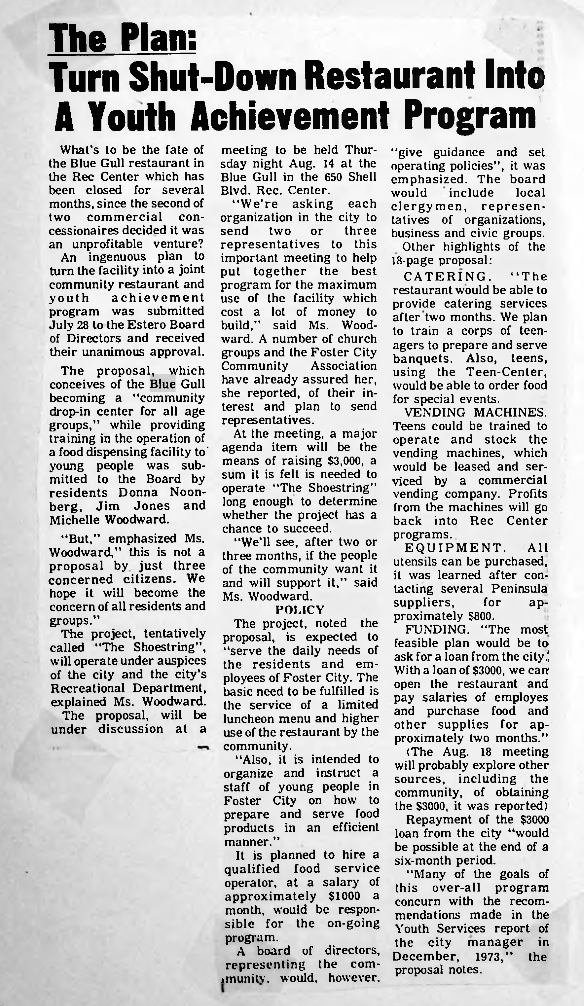
In its early years, the facility was known as the Blue Gull Restaurant. Despite its prime location, commercial concessionaires struggled to make the restaurant a profitable venture. By mid-1975, the Blue Gull had been closed for nearly two months, leading city officials and residents to seek new proposals for the space.
“The Shoestring” Gathering Place
In July 1975, residents Donna Noonberg, Jim Jones, and Michelle Woodward submitted an innovative proposal to turn the defunct Blue Gull into “The Shoestring Gathering Place,” a community drop-in center designed for all ages. The concept for The Shoestring was to prioritize “soul feeding” over dollar profit, creating a space where residents could gather for fun and involvement rather than just food.
A key component of the plan was a youth achievement program where Foster City teenagers would be trained in preparing and serving food. To launch the project, the backers sought community support to raise $3,000 to determine if the community would sustain such a non-commercial model.
The Rise of Deja Vu
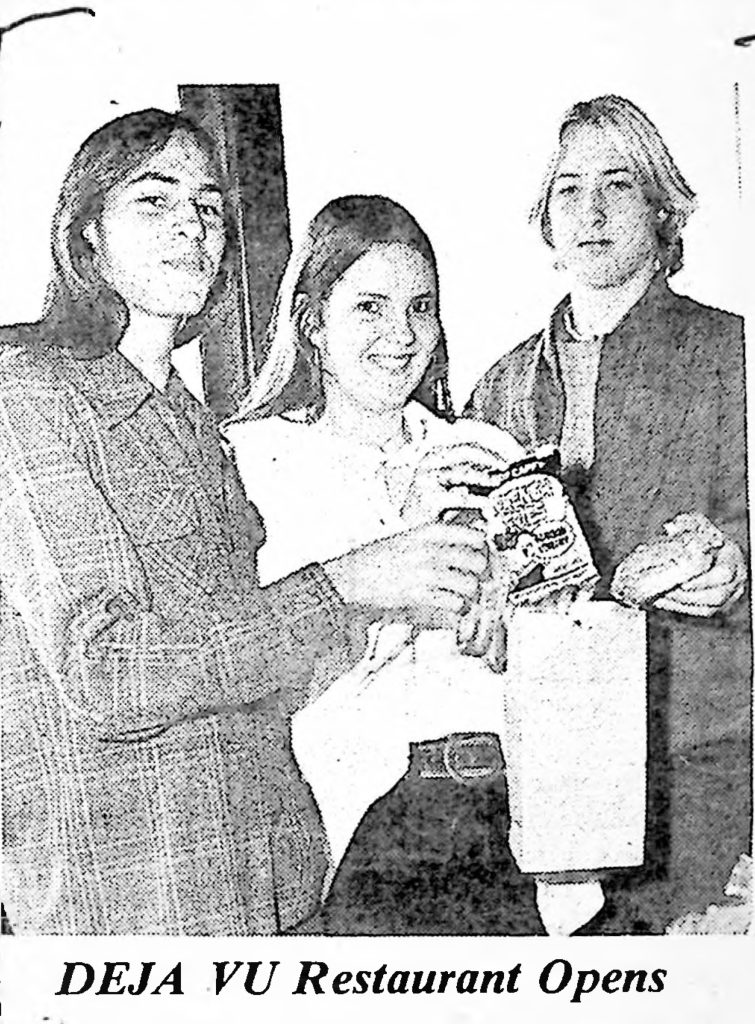
Penny Bein (Purchasing Manager), and Matt Welch (Vice President of Sales)
By November 1975, the facility transitioned into a new phase under the guidance of the Junior Achievement Company of Foster City. Named Deja Vu, the restaurant was operated by approximately 40 local youths from the junior and senior classes of Burlingame and San Mateo High Schools. Student leadership included Chris Simmons (Company President), Penny Bein (Purchasing Manager), and Matt Welch (Vice President of Sales).
The venture received significant corporate support from United Airlines, which served as the official sponsor. As part of this sponsorship, professional United Airlines chefs assisted company members by helping prepare food and teaching them the fundamentals of the restaurant business.
Deja Vu officially opened on Sunday, November 2, 1975, serving a menu that included sandwiches, fries, apple turnovers, cold drinks, and coffee. Approximately 200 members of the Foster City Sailing Club and friends were served during their sailing activity on opening day. Local government officials demonstrated their support for the student-run business by purchasing shares for $1 each, including Mayor John Lappin, Councilwoman Eileen Larsen, and Councilmen Jim Duffelmeyer and John McGrew.
Historical Reflection
While the restaurant space at the Recreation Center hosted various creative community initiatives, it was not without its critics. Some residents later labeled the facility a “white elephant,” noting that it had faced operational failures under three different sets of management. These critics argued that the $200,000 spent on the restaurant portion of the center might have been better utilized for park land or additional classrooms for the city’s growing youth programs. Nevertheless, the transitions from the Blue Gull to Deja Vu remain a significant chapter in Foster City’s history of community-driven experimentation.